

Digitalisation isn’t about adding more systems. It’s about making technology work better for your fleet.
From connected vessels to digital maintenance records, technology is reshaping ship management. Yet many shipowners still face a familiar challenge: systems that don’t communicate, inconsistent data and crews burdened with manual administration.
The solution isn’t always another software investment. Often, it starts with challenging the assumptions behind existing ones.
Here are seven maritime digitalisation myths worth reconsidering.
Myth 1: Digitalisation Means Replacing Everything
Reality: Improve before you replace.
Replacing established systems can introduce cost, disruption and additional training requirements. Before investing in new technology, assess whether your existing vessel management software can be improved through better integration, cleaner data or more effective workflows.
The takeaway: Build on what works. Fix what doesn’t.
Myth 2: More Data Means Better Decisions
Reality: Data quality matters more than data volume.
Thousands of equipment records mean little if they contain duplicates, outdated specifications or missing maintenance details. Poor-quality information can undermine reporting, maintenance planning and procurement decisions.
Effective maritime data management starts with accurate, structured and validated records that teams can trust.
The takeaway: Better decisions begin with better data.
Myth 3: Installing Software Solves Operational Problems
Reality: Software cannot fix a broken process on its own.
Even the best ship maintenance software depends on how information is entered, maintained and used. Unclear responsibilities, inconsistent procedures and incomplete records can limit its effectiveness.
Map the existing workflow, identify gaps and establish clear data standards before expecting technology to deliver meaningful improvements.
The takeaway: Fix the process. Then strengthen it with technology.
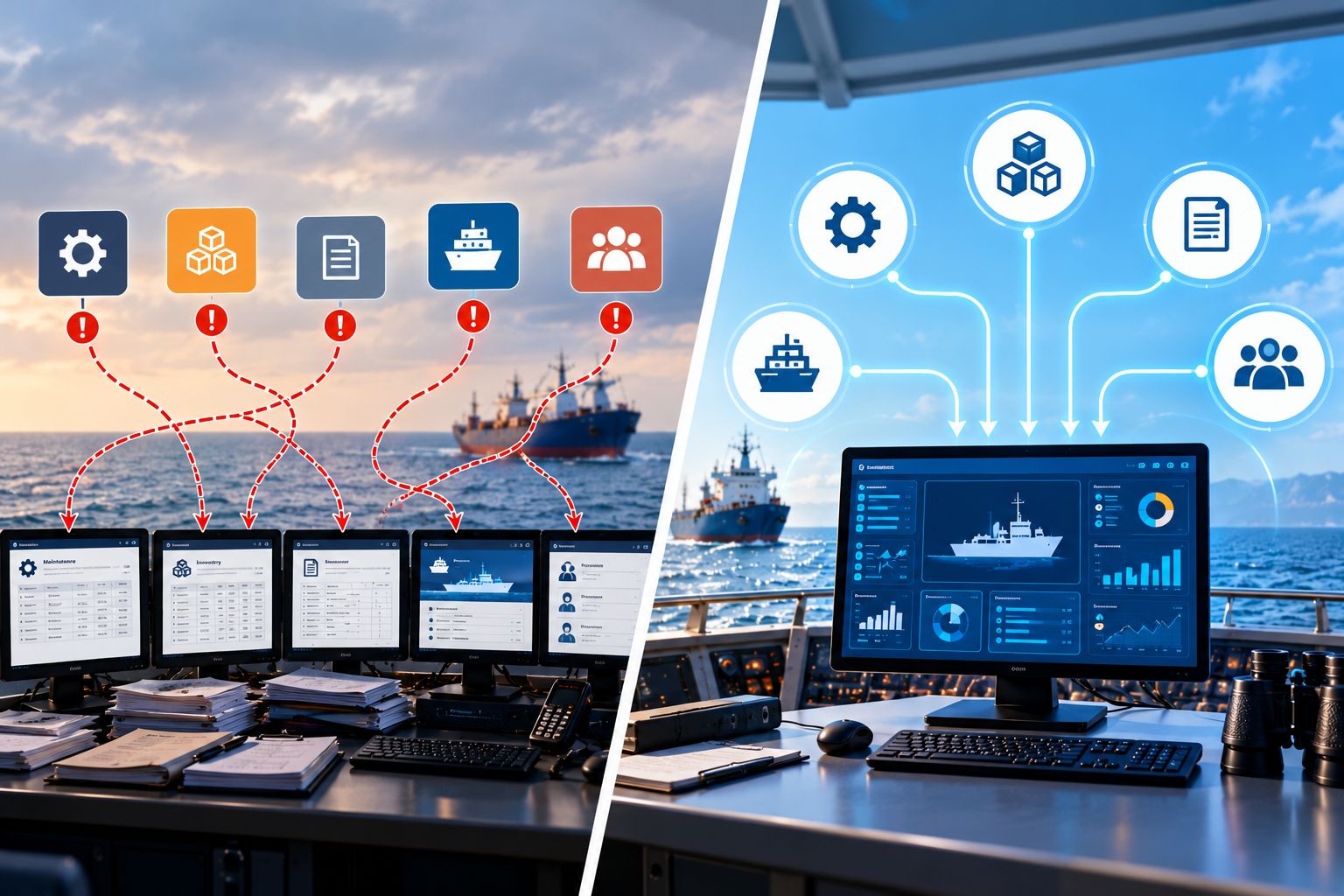
Myth 4: Every System Must Work Independently
Reality: Connected systems create a more complete operational picture.
When maintenance records, equipment information, inventory and shore-side reporting remain disconnected, teams often repeat data entry and struggle to reconcile conflicting information.
Integration helps information move between systems, while consistent data structures make that information easier to interpret.
The takeaway: Connect the information, not just the software.
Myth 5: Digitalisation Is Only for Shore Teams
Reality: Adoption begins with the people onboard.
A digital workflow that adds complexity to a seafarer’s day is unlikely to deliver its full potential. Crews need clear interfaces, relevant information and practical training that reflects actual onboard responsibilities.
Involve end users early, simplify routine tasks and make sure digital tools support operational work rather than creating additional administration.
The takeaway: If crews cannot use it effectively, the technology is not delivering its full value.
Myth 6: AI Can Fix Poor Data
Reality: AI needs a reliable foundation.
AI and advanced analytics can help identify patterns, support reporting and improve decision-making. But inconsistent equipment records, fragmented maintenance history and unreliable inputs can compromise the quality of those insights.
Before pursuing advanced analytics, strengthen data quality, standardise records and establish clear governance.
The takeaway: Build trusted data before building smarter systems.
Myth 7: Digitalisation Is a One-Time Project
Reality: Digital systems need continuous attention.
Equipment changes, software updates, evolving regulations and new operational requirements can quickly make information outdated. Without regular reviews, data quality and system effectiveness can deteriorate.
Ongoing validation, maintenance, crew feedback and periodic assessments help keep digital operations aligned with onboard reality.
The takeaway: Digitalisation is an ongoing operational discipline, not a one-off installation.
From Digital Investment to Operational Value
Successful maritime digital transformation doesn’t begin with the question, “Which technology should we buy?”
It begins with better questions:
- Can our systems exchange information effectively?
- Can our teams trust the data they use?
- Do our digital workflows reflect actual onboard operations?
- Are crews equipped to use the systems confidently?
- What should we improve before investing further?
At PiscesER1 Marine, we help maritime organisations strengthen the foundations behind their digital operations – from PMS data building and cleanup to migration, spares mapping and system integration.
Ready to make your existing systems work harder?
Start with a review of your PMS data and digital workflows. Identify the gaps, prioritise improvements and build a more reliable foundation for maintenance management and fleet operations.
Talk to PiscesER1 Marine about your next digital improvement.