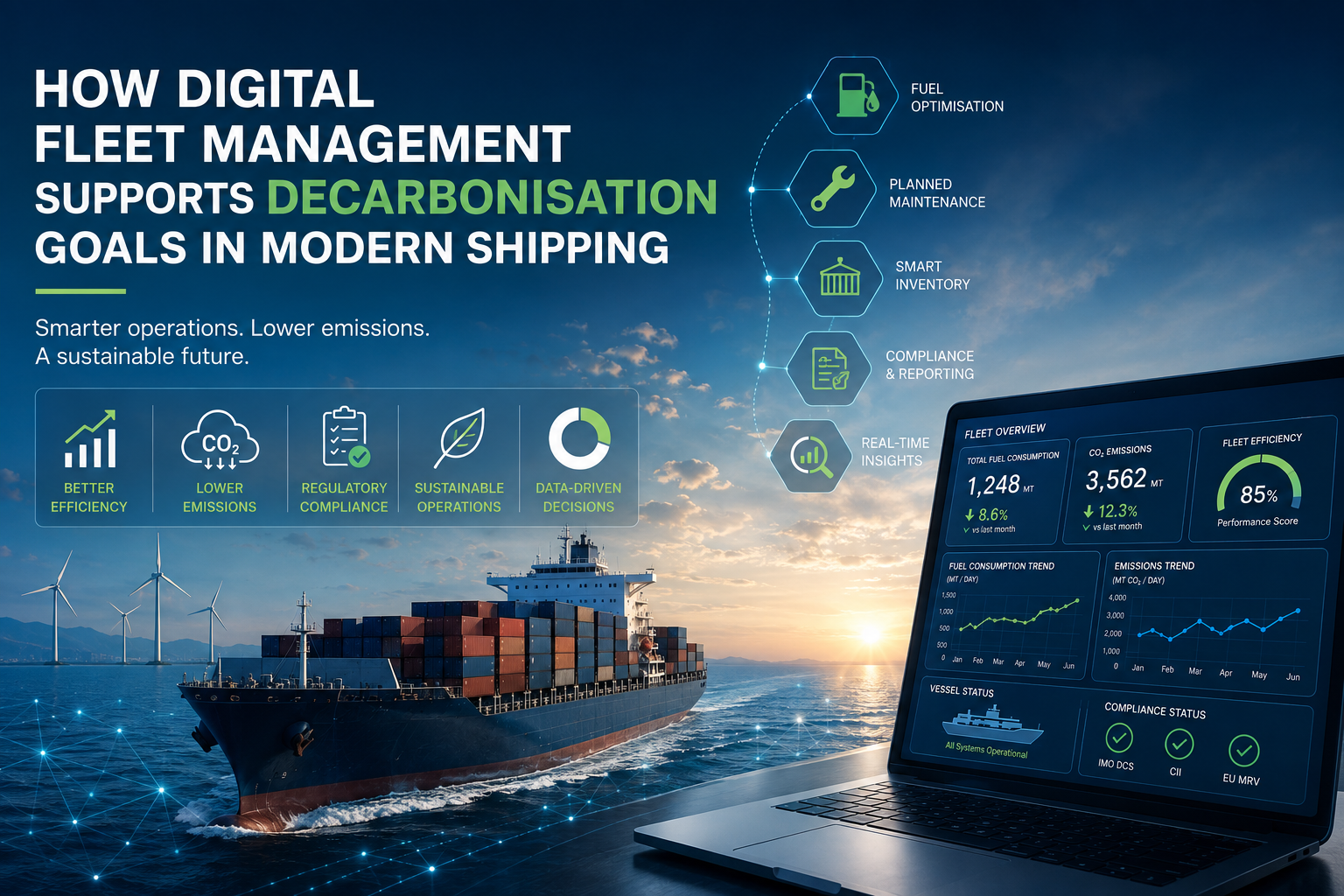
The shipping industry is not just about moving cargo anymore. It is more about moving towards smart operations, lower emissions and measurable sustainability.
With IMO requirements evolving and ESG expectations becoming increasingly important, decarbonisation is no longer just a long-term objective; it is becoming an operational priority for shipping companies.
Modern digital fleet management platforms help shipowners and operators turn that data into actionable insights that improve operational efficiency, support long-term maritime decarbonisation and strengthen compliance.
The Missing Link to Smarter Shipping
Fuel efficiency and emissions performance are influenced by hundreds of operational decisions that are made every day, not just during a voyage. Maintenance, equipment performance, voyage operations, procurement and resource management can all influence operational efficiency and, directly or indirectly, a vessel’s environmental footprint.
A connected fleet management software platform helps operators:
- Reduce duplicate purchases, unnecessary administrative effort and emergency repairs.
- Support accurate data collection and reporting for requirements such as IMO DCS, CII and EU MRV.
- Streamline maintenance, inventory workflows and procurement.
- Identify inefficiencies before they increase fuel use or operating costs.
- Gain real-time visibility into fleet performance and fuel consumption.
When every department works from the same operational data, the natural outcome is better fleet management and sustainability.
Fuel Optimisation Starts with Better Visibility
Fuel remains one of the largest operating expenses in the shipping industry, making every efficiency gain valuable.
Digital fleet management platforms can help operators consolidate fuel and operational data, compare vessel performance and identify trends or anomalies that may indicate inefficiencies.
When real-time performance data is available, technical teams are able to make informed decisions that not only enhance voyage efficiency but also decrease unnecessary fuel consumption without compromising operational reliability.
A connected fleet management software platform helps operators:
- Reduce duplicate purchases, unnecessary administrative effort and emergency repairs.
- Support accurate data collection and reporting for requirements such as IMO DCS, CII and EU MRV.
- Streamline maintenance, inventory workflows and procurement.
- Identify inefficiencies before they increase fuel use or operating costs.
- Gain real-time visibility into fleet performance and fuel consumption.
When every department works from the same operational data, the natural outcome is better fleet management and sustainability.
Keep Assets Performing at Their Best
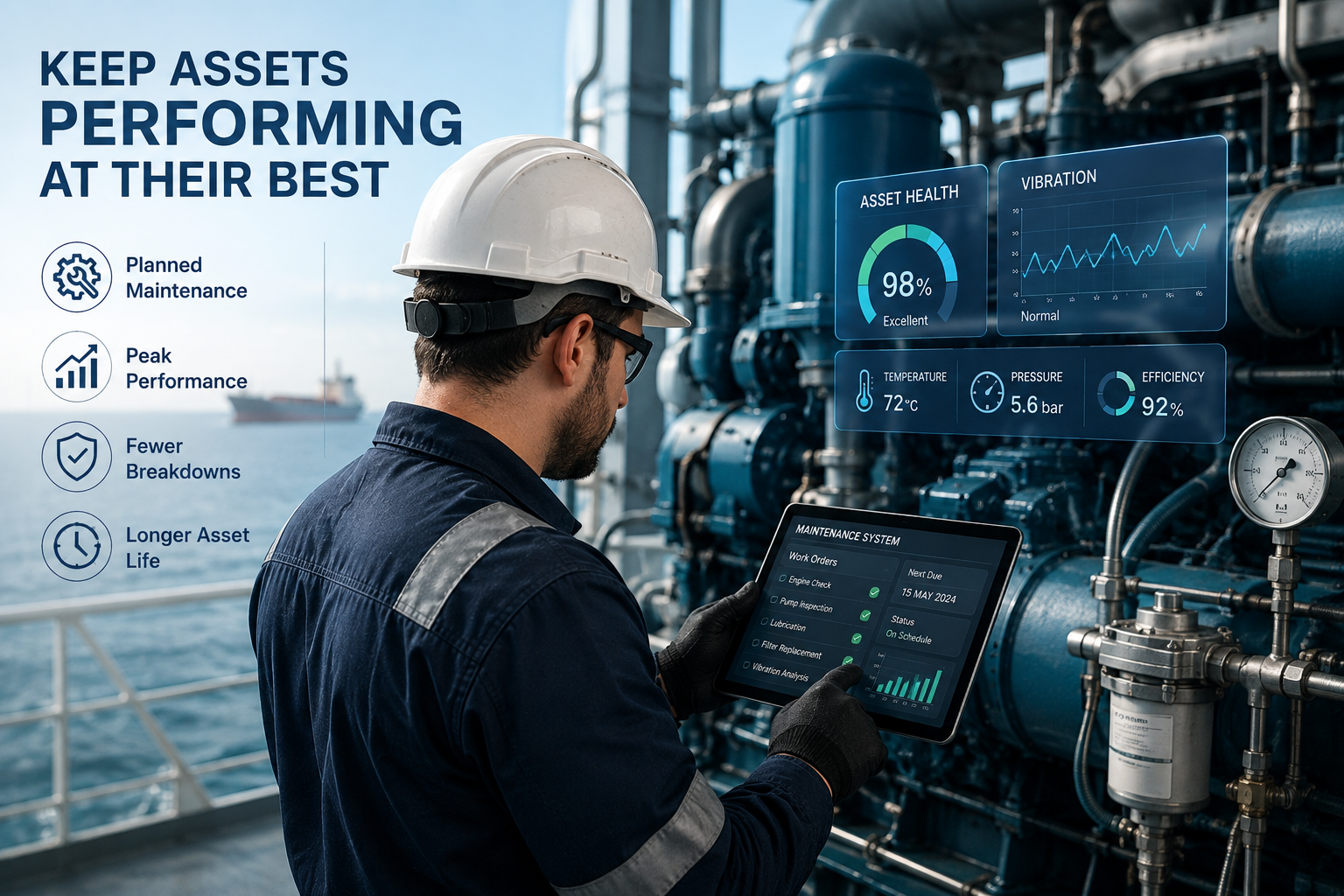
Equipment operating outside its optimum condition consumes more fuel and is more likely to experience unexpected failures.
A digital Planned Maintenance System ensures maintenance tasks are scheduled and completed consistently, helping engines, pumps and auxiliary machinery operate efficiently throughout the service life of the equipment.
Well-maintained equipment supports reliable operations while also reducing resource consumption and avoidable downtime.
Compliance Without the Complexity
Meeting environmental regulations such as IMO CII, DCS and EU MRV requires accurate, consistent operational data.
Managing information across multiple vessels is quite time-consuming and also prone to inconsistencies. With digital fleet management, it becomes easier because maintenance, operational and voyage records are centralised into a single platform, improving data accuracy and streamlining reporting.
This allows technical teams to focus more on analysing fleet performance rather than compiling spreadsheets.
Smarter Procurement Supports More Sustainable Operations
Better visibility into spare parts and inventory levels can help operators reduce duplicate purchases, avoid unnecessary urgent deliveries and manage stock more efficiently. These improvements can reduce operational waste and support more efficient resource utilisation across the fleet.
Data That Moves Fleets Forward
The real value of digital fleet management is not about collecting more information. It is more about making operational data actionable.
Fleet managers can monitor equipment health, identify recurring maintenance trends, compare vessel performance and also prioritise improvements using real-time insights instead of assumptions.
This enables continuous operational improvement that benefits both sustainability and fleet performance.
Building the Fleet of Tomorrow
Decarbonisation cannot be achieved through a single initiative. It is the result of consistent improvement across fleet management, procurement, maintenance, compliance and day-to-day operations.
Digital fleet management connects these critical functions into one intelligent ecosystem, which gives shipping companies improved operational control, greater visibility and stronger decision-making capabilities.
The outcome is a fleet that operates more efficiently, manages resources effectively and is better prepared to meet evolving commercial and environmental expectations.
The most effective route to decarbonisation is not simply consuming less fuel; it is more about managing your fleet more intelligently.
Future-Ready Fleet Management Starts Here
Decarbonisation starts with better decisions – and better decisions start with better data.
Discover how PiscesER1 Marine connects maintenance, inventory, procurement, compliance and vessel operations in one digital platform, helping shipping companies improve visibility, operational efficiency and fleet performance.