
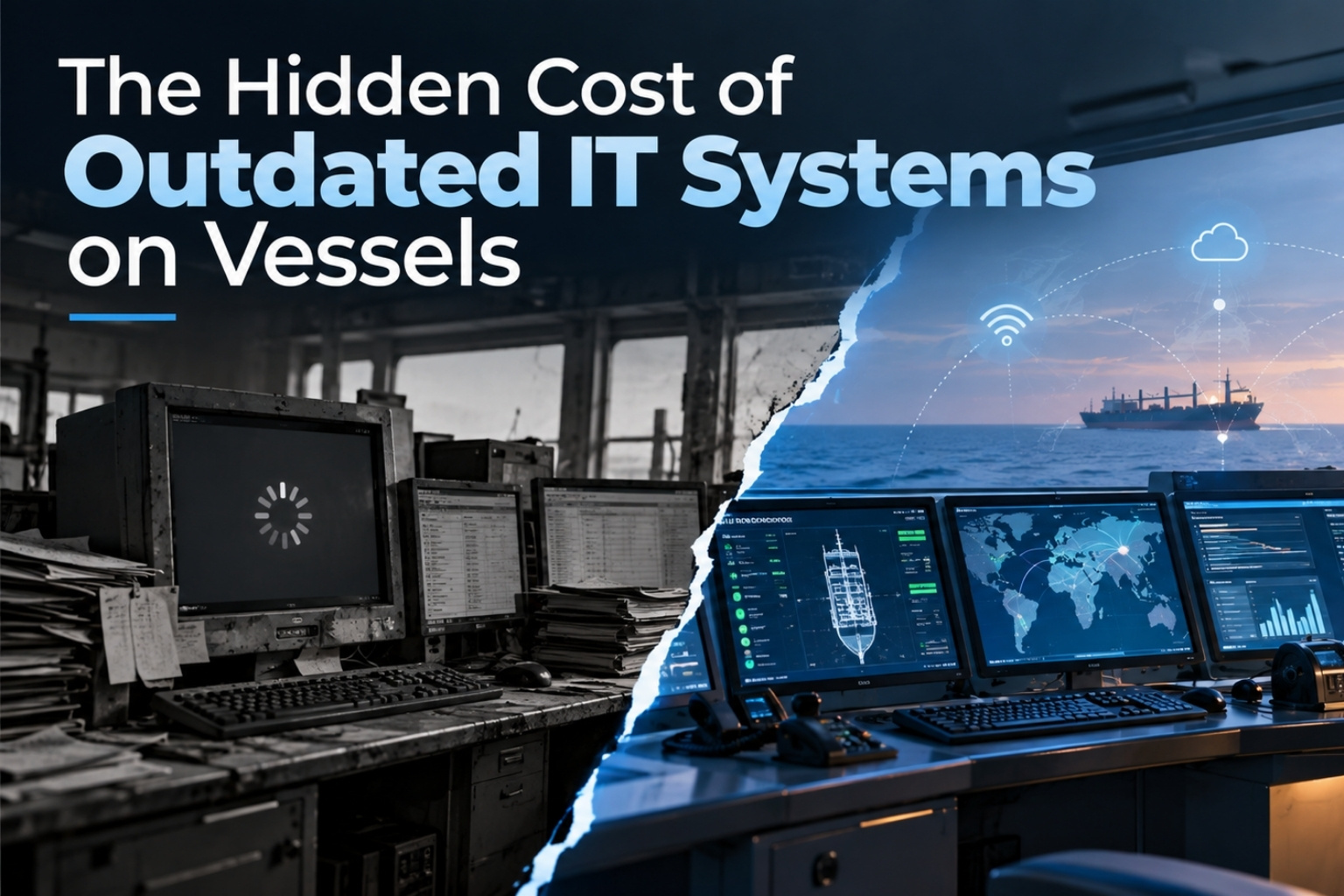
Obviously, a vessel can have advanced navigation, modern engines and a sophisticated PMS and still be running on outdated IT systems.
The warning signs are usually familiar: a computer that takes minutes to load, legacy software, unsupported hardware, unreliable onboard connectivity, disconnected applications, or a crew member maintaining a workaround because that’s how the system has always worked.
The real cost is not handling the old hardware; it is everything that starts moving slower because of it.
For fleet managers and shipowners, outdated IT can affect maintenance, procurement, connectivity, cybersecurity, reporting and ship-to-shore operations all at the same time.
Slow IT Creates Fast Operational Problems
A slow onboard system will rarely start with an IT problem. Imagine a superintendent needs equipment history from the vessel. The PMS is running slow, the connection drops, and the required information is split between local files, PMS and emails.
Five minutes becomes 20, then the maintenance issue waits. Multiply that across a fleet, and the hidden cost becomes significant: more manual work, slow decisions and more operational friction.
The question is not whether the system is working; the question is how much unnecessary work it is creating every time someone uses it.
Legacy Hardware Is More Than a Performance Issue
Old onboard computers, servers, network equipment, switches and other hardware can become difficult to maintain as vendors discontinue support. This creates a practical fleet management problem.
When a critical component fails, can it be replaced immediately? Is the replacement compatible with the existing architecture? Can the system be restored remotely? Does the vessel still have the required software and configuration? IMO guidance specifically recommends evaluating unsupported hardware and software as addressing vulnerabilities.
A system that is technically operational can still be operationally exposed.
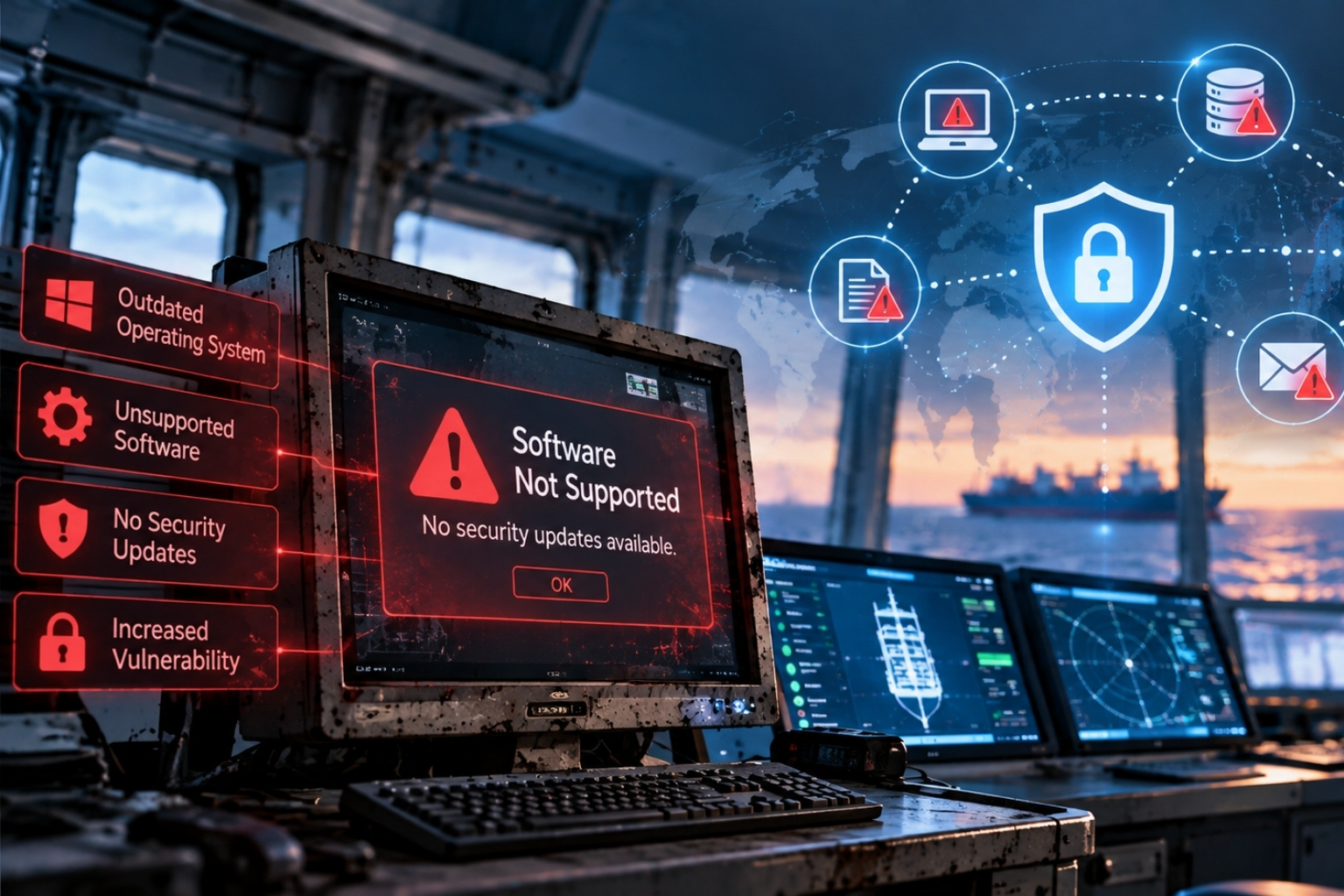
Unsupported Software Creates a Cybersecurity Gap
Maritime cybersecurity is no longer something fleet teams can separate from vessel IT. Connected vessels increasingly depend on OT systems and onboard IT for communication, navigation, machinery monitoring and operational workflows. When operating systems, firmware, applications and security tools remain unpatched, the exposure expands.
There is another challenge: updating a vessel is not just as simple as updating an office laptop. Shipboard software changes need to consider compatibility and connectivity.
This means fleet IT needs a controlled lifecycle and not occasional emergency upgrades.
Digital workflows can bring down that friction by making information easy to capture, validate, find and share. The real question is not how much digitalisation has happened, but it is how much unnecessary work was removed.
The wider maritime sector provides a useful illustration. World Bank research on Port Community Systems has shown how efficient information exchange can reduce operational inefficiency and administrative activity.
Fragmented Applications Create Data Gaps
Here is where outdated IT becomes expensive in a different way. The problem may not be an old application; it may be 10 systems that do not communicate properly.
A maintenance requirement sits in the PMS, spare availability sits somewhere else, procurement is tracked through another workflow, technical communication happens through email, and reporting happens in spreadsheets. The data exists.
The operational picture does not. That fragmentation makes it hard for technical teams to answer basic questions quickly:
- What equipment needs attention?
- Is the required spare onboard?
- Who is waiting for approval?
- Has procurement started?
- What changed since the last inspection?
- Can shore teams see the same information as the vessel?
Connectivity Cannot Fix Bad Architecture
Better bandwidth is valuable, but connectivity alone will not solve fragmented vessel IT. If hardware, applications and data flows were never designed to work together, faster connectivity can simply move disconnected information faster.
A future-ready maritime IT environment needs standardization, interoperability and controlled data exchange. The IMO’s 2026 maritime digitalization strategy specifically emphasizes those areas alongside data governance and data sharing.
For ship managers, this means modernization should focus on the architecture and not just replacing individual devices.
The Upgrade Question Is Bigger Than Replace or Repair
A practical vessel IT assessment should look at 5 things:
Hardware lifecycle
Which devices are unsupported, obsolete or approaching end of life?
Software lifecycle
Which operating systems, firmware and applications need controlled upgrades?
Network architecture
Can critical onboard systems communicate reliably and securely?
Data flow
Where does operational information originate and where does it become disconnected?
Ship-to-shore support
Can technical teams monitor, diagnose and support systems without waiting for the next port call?
This turns IT modernization from a hardware replacement exercise into an operational resilience strategy.
Modernize the Vessel Without Rebuilding Everything
The answer is not always replacing every system on board. In many fleets, the smarter approach is to assess the existing environment, identify the higher-risk gaps and modernize progressively.
That can mean improving IT architecture, strengthening connectivity, securing remote access, replacing unsupported hardware, cleaning up application environments and connecting operational workflows.
Only a simple objective is required: making existing IT technology work better together.
Is Your Vessel IT Ready for the Next 5 Years?
PiscesER1 Marine helps shipowners and managers assess and strengthen Vessel IT, connectivity, cybersecurity, onboard systems and ship-to-shore operational workflows — without assuming that everything needs to be replaced.
Start with an assessment. Identify the gaps. Fix what is slowing the fleet down.